In Print

Reading, Learning Shares
Book and Journal of Mattanaw
Volume I, Book VI, §i.ii, Draft
Publisher: PlaynText, Tempe, Arizona
Publisher
Copyright © 1984 to Present by Mattanaw. All Rights Reserved.
Publisher: PlaynText Location: Tempe, Arizona
PlaynText is dedicated to the publication of high quality journal publications issued in premium book format, as book/journal hybrids. Each publication is intended to be an illustration, potentially, of the maximum and least-inhibited use of free thought and free expression.
Copying, distributing, plagiarising, processing, storing, and serving the contents of this book is a violation of intellectual property, unless otherwise indicated by the copyright holder elsewhere, as it relates to this specific issue of the Book and Journal of Mattanaw. For permission to use any contents of this book, please contact the author at http://mattanaw.org/com.html.
Published by PlainText/PlaynText, Inc, companies wholly owned by the author, Mattanaw, Mattanaw, (formerly “Christopher Matthew Cavanaugh”). Mattanaw is a legal name and not a pseudonym. While owned by Mattanaw, the Book and Journal is published by PlainText/Playntext, a large organization, comprised of many contributors, at a substantial investment. It is not self-published.
Printed in Tempe, Arizona, in the United States of America.
Published and printed by PlaynText, an imprint of PlaynText, Inc.
The Publisher is not responsible for the content of others produced on websites, applications, social media platforms, or information related storage or AI systems. The processing of this Book and Journal by an AI System is prohibited.
Library of Congress Control Number (pending)
Library of Congress ISSNs: 2998-713X (Online), 2998-7121 (Print)
Author
The Author and Editor-in-Chief, by his enterprise client’s headquarters in San Diego, California
Artist/Author: The Honorable Dr.9 Mattanaw, Christopher Matthew Cavanaugh, Retired
Interdisciplinarian with Immeasurable Intelligence. Lifetime Member of the High Intelligence Community.6
- Masters Business & Economics, Harvard University, Studies Completed
- Attorney, Pro Se, Litigation, Trial, Depositions, Contracts (E.g. State of Alaska v. Pugh, et. al., Alaska Superior and Supreme Courts)4
- B.S. Psychology, University of Maryland, 4.0, Summa Cum Laude1
- B.S. Computer & Information Science, University of Maryland, 3.91, Magna Cum Laude2
- B.A. Philosophy, University of Maryland.3
- G.E.D., State of Maryland, Montgomery County, 1999.
- Lifetime Member of the High Intelligence Community, Mensa Lifetime Member
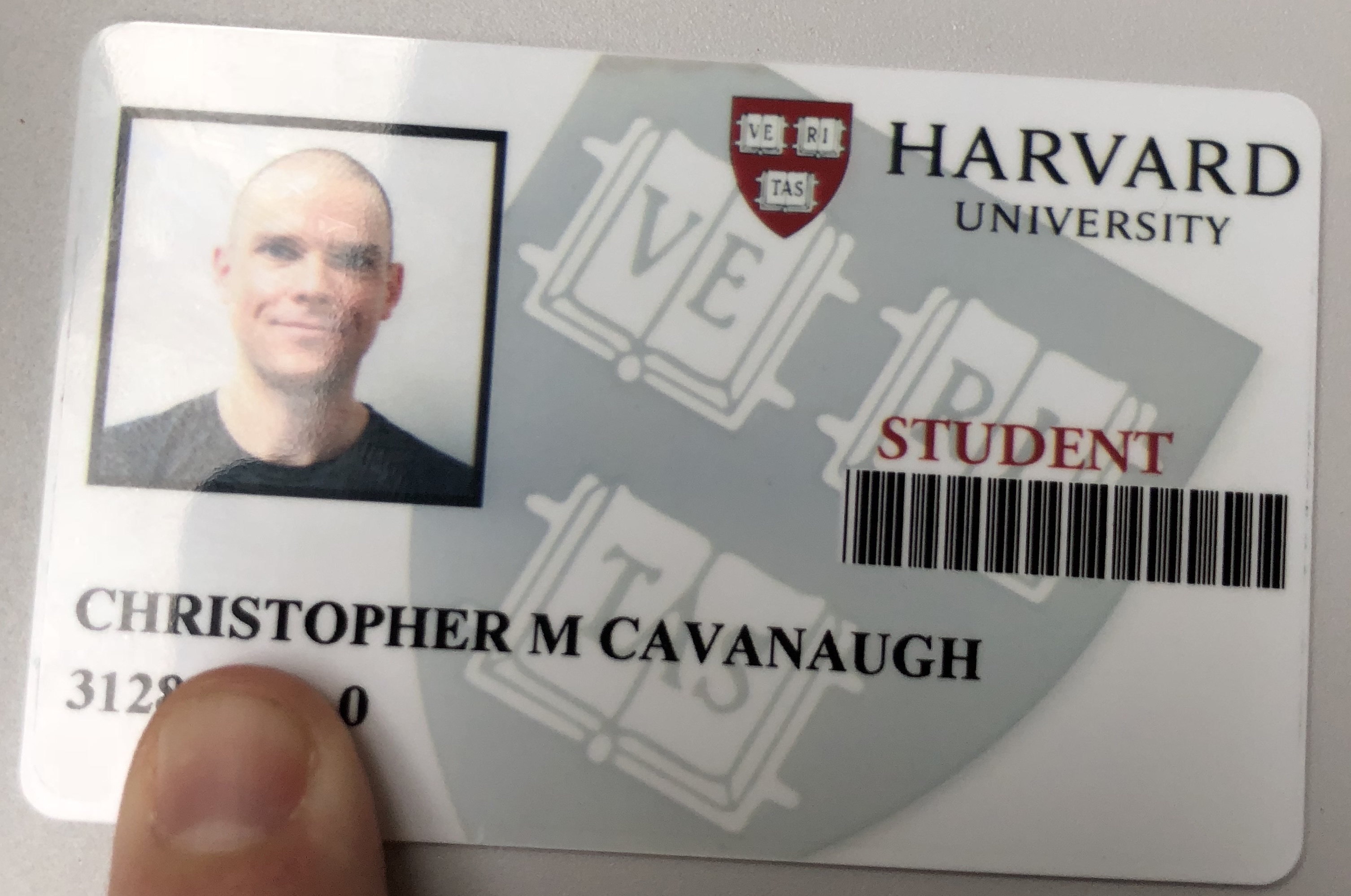
Former Chief Architect, Adobe Systems
Current President/Advisor, Social Architects and Economists International.
CEO PlaynText | CEO PlainText
Contact:
Resumé
Edit History
- 536 Wanattomians, Epoch 1768816852, Monday, January 19, 2026
03:00:52, United States of America
- Addition of new section on readings from artificial intelligence and reluctance to use AI tools.
- Updated: Wednesday, July 3rd, 2023, at 1:27 PM Sudbury, Ontario, Canada Time
- Updated: Sunday, May 21st, 2023, at 1:26 PM Dodges Ferry, Tasmania, Australia Time
- Updated: Tuesday, November 29th, 2022, at 3:45 PM Cairns, Australia Time
- Created: Sunday, September 18th, 2022, at 4:45 PM Arizona Time
Contents
Introduction
A living autobiography trending towards completeness would need to include the author’s history of reading and learning. Here you’ll find an increasingly comprehensive list of all the learning experiences of the author, particularly, and initially, reading experiences.
As stated elsewhere, the living autobiography has the intention of providing, as live progresses, more information, and recent postings, regarding each category that relates to the total experience of a person. This page is focused on learning, but clearly, learning events are also related to other experiences and ways of interacting with the world, including productions on the rest of the website. Here are the key categories in the living autobiography which do a good job of covering the ways in which the author would be sharing his experiences:
- Thinking Shares (aka ThoughtStream)
- Experience Shares (aka SocialNuggets)
- Bodily Shares (aka OpenHealth)
- Spatial Shares (also Nature Shares)
- Learning Shares (also Reading)
- Writing Shares (also Site History)
The author uses this website as his primary way of learning. The site includes his own writings which he finds to be of a quality of greater interest than what is found elsewhere, for his goals and purposes. As he writes he learns, but also, he reads and listens to what he has written. Likewise, his productions on scenic natural experiences, are for use in experiencing higher quality life-moments. Increasingly this website is for replacing media stimulation, with stimulation from his own mind, creations, and experiences.
Creating this list, and revising this list, is expected, and has, stimulated additional reading and desire to learn. My digital library includes digital books which are in progress or are intended to be started soon. This resource provides free books to interested readers, that directly relate to this writing, but also relate to the author’s intended future and present learning experiences. The Bibliography provides references to the author’s writings which the author has learned from and intends to self-reference in writings wherever relevant. The author’s resumé includes his prior education and work history, which culminated in his being a consultant guiding large enterprises globally as a business and digital strategist, and his work as former Chief Architect at Adobe Systems. This information can also be found on his linkedin profile. His brief bio includes some summary information about his education, successes, and background in giftedness and the high intelligence community. His personal form includes his data collections on his own behavior which served to provide needed self-learning and self-help over a period of several years, which is still in usage without taking records today.
More will be added as additional learning experiences are had.
— Mattanaw
November 28th, 2022, Cairns, Australia.
My Limited Reading of Artificial Intelligence
Artificial Intelligence is a product I’m highly resistant to using excepting for some specific purposes. As of some point in 2025, a prominent search engine has included in its functionality AI summaries and results by default, meaning for anyone to use these now socially-required search engine features, one would just be forced to see AI related results. The search-engine, at this time, is really required for browsing the internet, not having an alternative approach for locating materials, using some index or directory or some other method of locating relevant websites. Because it has become so fast and fairly accurate, the results needed are simply found more quickly, and the AI functionality has greatly improved the use. But before the AI feature was included, it was already a required tool for the public to use, and was not really optional, and if anyone stopped using search engines, they would become somewhat dysfunctional or at too serious a loss.
Prior to this change in 2025, and around early 2025 or perhaps slightly earlier, I did some reluctant testing of an AI tool, that showed to me that really it was much more powerful than plain google searching. Wanting to limit my relationship with AI, because there are many legal issues around the ingestion and learning from websites skipping over terms and conditions, and privacy policies, and any legal, that make me not want to support the technology. It is not clear how the utilization of the technology supports these activities, but as I said, one is at a serious loss if one stops using search engines that already provide AI results, and one loses doubly if one can’t search using a tool that may have stolen your content already. Somewhat recently, a very large portion of the content of this Book and Journal was, contrary to the terms and conditions, simply stolen by several very large AI and search companies at my expense, since I had to pay for the traffic. I have not yet determined the extent in which I want to interact with AI tools, but if they are forced into search, and utilize what was stolen from me in huge quantities, I will want to use it for whatever might not have additional unwanted side effects.
This Book and Journal is highly interested in authenticated living autobiography, and using AI does create some risk of accusations about the sources of the content. While the sources of the content are easily authenticated as coming from myself alone, because the writing style, vocabulary, and thinking style, was all existing on the internet before artificial intelligence and is stored in at least one archiving platform, it can be clearly demonstrated that AI does not write anything here. There is more to say about this, but it is clear and obvious, on many considerations, that the writing of this site could not come from AI.
I do not use AI for anything that would cause reasonable claims that my content has come from AI, because there are no software integrations with The Book and Journal, and the author uses AI for reading of specific materials only. AI is not even utilized for the bulk of the subject matter included in The Book and Journal. Here, I will openly provide, areas in which I do read from Artificial Intelligence.
Over the past year, I did not keep meticulous track of these utilizations, although it is unreasonable to think anyone else would. What I can say about the last year is that there was extensive usage in the following areas:
- Testing how AI summarizes searches about the author or The Book and
Journal to see what it says that’s true and what it fabricates.
- The finding of this effort is that AI is extremely false in its presentation of The Book and Journal overall, although on some queries has become increasingly pleasing and honest.
- Research of Electrical Engineering.
- Research of Mathematics.
- Research of Physics.
- Research of Low Level Programming for Linux Systems and Microcontrollers.
- Temporary uses for shopping:
- Finding the thermal properties of camping gear.
- Finding what good college textbooks exist for subjects.
The uses are very constrained, and I’m constraining them further now, for 2026 and beyond, so that I can more fully account for my utilization.
While my use of AI tools feels unfortunate, and I’m reluctant, I do have to admit where it seems an extreme advancement on what has existed prior, and makes it a welcome inclusion in the search engine tools, despite thefts of the companies that created them. The list above can be used to summarize the ways it is useful: combining programming information into one source with code that largely works in contexts that are more challenging. As a former Chief Software Architect of large corporations, I can state this is definitely a very large change for people in the industry. It was too hard to quickly research before, and in many ways it still is, but the facility provided by AI makes it seem as though questions will simply be answered in the future. That is the extent of the power nearly. If I’m working on a specific microcontroller, programming in C, with a combination of hardware tools, I can ask it a question or a few, and in a very short time, I have working code. Doing this before AI was impossible. In fact, personal development time in this domain was so fast because of AI I’m convinced that it is education replacing and people learning this way will simply be more powerful than people learning in traditional eduction, which becomes largely superfluous.
So electrical engineering and programming is part of the above list. Another area of importance to me is the development of my mathematical skill. Access to college textbooks is too challenging for someone with my lifestyle, and they are too heavy to carry, although I really enjoy and prefer them in a number of ways. The big problem with math texts in addition to not having them handy as one travels, is that if one does have them somehow, digitally or another way, the problems for practice simply do not reliably have answers. Too few questions have answers, and too many are reserved for college testing or other purposes by instructors. Typically, odd problems have solutions. But this is an irritation point for anyone who has taken any math course at any time, and since it is such a widespread problem, the advancement in AI to take away this annoyance is really obvious. If I want to learn something in linear algebra, a subject I’ve been studying periodically, I can simply ask it for 10 questions with answers and it will provide them. This is for free and is immediate. Explanations from AI on math still seems limited though, and so for this area of study, I rely on a combination of books for explanations and discussion, and for AI for question/answer, and for producing more problems to study and answer with the ability to verify answers with AI provided solutions.
Another area where I’ve used it somewhat extensively is with shopping. Shopping is another area in which AI is so helpful, it is behavior changing and one is limited if one does not use it, while the culture adopts it. My use case for this is not large nowadays, since I need few things, but if I’m needing anything that requires and product comparisons, ratings, rankings, and so on, the AI tool can simply look at much of the internet and provide a more totaling response. Camping and hiking is a unique shopping domain, because the gear sold really does need to be field proven, because if it is not, one is not in a good position for replacement while doing the activity. For example, if my tent breaks, I am tentless, and might die on my camping trip, depending on circumstances. This is more likely true with the sleep pad, the sleeping bag, and water filtration systems. The weight of the gear has to be low enough to carry, and all has to really work when I’m doing my trip. How does one actually know that these goods actually work? Well, historically one would read texts, like one I had in my possession, called “The Ultimate Walker”, by Colin Fletcher, that talks about the best gear available and how to use it and what to expect. But this book is not quite sufficient on its own, particularly given a changing market. To search one would look at books like this one, and look at various randomish websites found through search engines, having various levels of quality and trustworthiness; but now, these are aggregated, and as I said, in AI, there is a more totaling view, and this view provided also has much greater quality of presentation. My recent searches to get camping gear have included responses from AI that touched on scientific principles that then touched on gear sold, prices, and trustworthiness. This allows for better planning around shopping for hiking and camping gear and also for camping and hiking.
At present these are the main areas I’m interested in doing searches. I think these areas of interest will continue, and as possible, I will include archived materials showing my specific searches, results, and the quality of each. This may facilitate additional testing of AI tools themselves, and as I said before, as I test responses about this particular Book and Journal, too much is pure fabrication. A critique of the readings of AI will likely appear in the near future.
Reading History
Below is a list of some books I’ve read, to give the reader some understanding of my reading history. This list is not complete, but provides what I’ve shared previously on Facebook to others, and includes those volumes I can easily recall.
It should not be considered an exhaustive list of my readings, and does not include many readings from my successful career in technology. While working, in retrospect, I cannot recall any other colleagues having books on their desks, not to call them out, or to say they did not read! However, my reading was very obvious and open, and I really did depend on technical books to advance my career and would advocate greatly for reading to enable improvement in career growth. It also does not include textbooks I’ve purchased for the many classes I’ve had in my extensive education, that I also read with care and interest, preferring textbooks to instructors. Textbooks are typically written by very knowledgeable teachers from better universities, which is a reason, considering the choices and situations of others, I don’t advocate for attending the very best universities, but those that are most appropriate to conditions and the details about the person. Reading material will come from good instructors, very likely, and if one actually reads it, one has gotten and education partly from other universities.
If you really read a textbook completely from a university professor at Oxford, you have done what that instructors students at Oxford won’t do.
I would read while working out too, which is a cause of being able to complete as many books as I have.
While I’ve read extensively, I would argue that in comparison to what others claim regarding their reading, I have not read that much; however, there is an easy explanation for that. People don’t read as much as they say they do.
I’m an advocate of slow and careful reading, with interaction with works. Going by my own reading rate, and observations of the reading behavior of others (which is absent, at work, at the gym, where I also read, at coffee houses, and pretty much everywhere else I can think of, except maybe in private at home, which is conveniently unobservable), I know that a very small number of books can actually be completed, even with considerable time investment.
I believe since I’ve had so much time observing, that it is pretty certain people have completed very few books, and I’m not any kind of advocate of completion either. I should better say, that I don’t think people’s reading rates and reading behavior really substantiates any claims to quantity of text read and comprehended. I’ll stop reading a book if I’m not satisfying my reading objectives, since books are for me, for learning, and not for having a completion tally, to show off to others. Yet, here, I am showing off a little perhaps, on both completion, since I complete books, but also, total quantity comprehended.
I have also included some works that I’m reading now, slowly and surely, to a stopping point which might include no longer benefiting, if not finishing, which is the norm, but not the only way of stopping.
- 1984, George Orwell
- 48 Laws of Power, Robert Greene
- Bad as I Wanna Be, Dennis Rodman
- Dangerous Places, Robert Young Felton
- Couplehood, Paul Reiser
- Culture Shock, South Korea
- Culture Shock, China (requires confirmation)
- Culture Shock, Egypt
- Egypt (travel book, title requires confirmation)
- Bolivia (travel book, title requires confirmation)
- China (travel book, title requires confirmation)
- South Korea (travel book, title requires confirmation)
- Ireland (travel book, title requires confirmation)
- Europe on a Shoestring, Lonely Planet (partial read)
- An Encyclopedia of Modern Bodybuilding, First Edition, Arnold Schwarzenneger
- American Heritage Collegiate Dictionary (read directly, referenced, and underlined much of the book).
- A Buddhist Bible, Dwight Goddard (half, skipped some peripheral Buddhist material)
- A Grief Observed, C.S. Lewis
- A History of Mathematics, Uta C. Merzback and Carl Boyer (partial)
- A History of Modern Computing, Ceruzzi (partial)
- A History of Western Philosophy, Bertrand Russell
- A Practical Guide to Off-grid Living in Alaska, Jon Crocker.
- Why I am not a Christian, Bertrand Russell
- Philosophical Essays, Bertrand Russell
- The Philosophy of Logical Atomism, Bertrand Russell
- My Philosophical Development, Bertrand Russell
- The Myth of Sysiphus, Albert Camus
- On War, Carl von Clausewitz, (25-40 pg partial with sampling).
- Autobiography of Bertrand Russell, Bertrand Russell
- An Analysis of Mind, Bertrand Russell
- Marriage and Morals, Bertrand Russell
- Skeptical Essays, Bertrand Russell
- Why I am not a Christian, Bertrand Russell
- In Praise of Idleness and Other Essays, Bertrand Russell
- The Problems of Philosophy, Bertrand Russell
- The Feynman Lectures, Vol 1, Richard Feynman (in progress)
- The Feynman Lectures, Vol 2, Richard Feynman (in progress)
- The Feynman Lectures, Vol 3, Richard Feynman (in progress)
- A Theory of Determinism, Ted Honderich (partial, very little)
- A Treatise on Human Nature, David Hume (partial)
- An Introduction to Zen Buddism, D. T. Suzuki
- An Outline of Philosophy, Bertrand Russell
- Animal Liberation, Peter Singer
- Canada, A Very Short Introduction, Donald Wright
- The Rough Guide to Canada, Christian Williams
- The Rough Guide to Egypt, Dan Richardson (circa early 2000s edition, ~2005).
- Bolivia (Travel Book, Cannot Recall Which).
- China (Travel Book, Cannot Recall Which).
- Hegel: A Very Short Introduction, Peter Singer
- Marx: A Very Short Introduction, Peter Singer
- Apology (4 Related Dialogues of Socrates), Plato
- Be Here Now, Ram Dass
- Beyond Good and Evil, Friedrich Nietzsche (partial)
- Blink, Malcolm Gladwell
- Breaking the Spell: Religion as a Natural Phenomenon, Daniel Dennett
- Buddhist Scriptures, Donald Lopez, Jr.
- Cairo Trilogy, Naguib Mahfouz
- Catechism of the Catholic Church, Catholic Church
- Century (partial).
- Civilization and Its Discontents, Sigmund Freud
- Complete Letters of Vincent Van Gogh
- Critique of Pure Reason, Immanual Kant (partial, very little).
- Critique of Religion and Philosophy, Walter Kaufman
- De Rerum Natura, Seneca (partial)
- Dictionary of Philosophy, Ted Honderich
- Dialogs Concerning Natural Religion, David Hume
- Dialogue on Determinism, ADDAUTHOR
- Discourse on Method, René Descartes
- Dream of the Red Chamber, Cao Xueqin
- Einstein: Philosopher-Scientist, Albert Einstein (Read his autobiography within, entire)
- Enchiridion, Epictetus
- Experiments on Plant Hybridization, Gregor Mendel
- The Epicurus Reader, Epicurus
- Ethics: Inventing Right and Wrong, J. L. Mackie
- Faust, Johann Wolfgang von Goethe (partial)
- Fear and Trembling, Søren Kierkergaard
- Gestalt Therapy Verbatim, Fritz Perls
- Groundwork of the Metaphisics of Morals, Immanual Kant
- Heidegger: A Very Short Introduction, Oxford University Press, Michael Inwood
- In and Out of the Garbage Pail, Fritz Perls - Jeet Kun Do, Bruce Lee
- John Stuart Mill, Autobiography. John Stuart Mill
- Lanugage, Truth and Logic, A. J. Ayer
- Logic, Language and Meaning, Volume 1, LTF Gamut (partial)
- Logic: A Very Short Introduction, Oxford University Press, Graham Priest
- Marriage and Morals, Bertrand Russell
- Mastery, Robert Greene
- Mathematical Logic, W.V.O Quine (partial)
- May it Please the Court, Peter Irons
- Meditations for the Humanist ADDAUTHOR
- Meditations on First Philosophy, René Descartes
- Meditations, Marcus Aurelius
- Mein Kampf, Adolf Hitler
- Mere Christianity, C.S. Lewis
- Minds, Brains, and Science, John Searle
- Miracles, C.S. Lewis
- Military Strategy, A.J. Echeverria
- Modes of Thought, Alfred North Whitehead
- Adventure of Ideas, Alfred North Whitehead
- Process and Reality, Alfred North Whitehead
- Monadology, Gottfried Wilhelm Leibniz (partial).
- Principles of Human Knowledge, George Berkely.
- Nausea, Jean Paul Sartre
- Nichomachean Ethics, Aristotle (approximately half)
- Nietzche, Walter Kaufman (half)
- Old and New Testaments of the Bible (half of each approximately).
- On Formerly Undecided Propositions of Principia Mathematica and
Related Systems, Kurt Godel
- One World: The Ethics of Globalization, Peter Singer.
- Origin of the Spiecies, First and Sixth Editions, Charles Darwin (partial)
- Plutarch’s Lives, Vol I, Plutarch
- Plutarch’s Lives, Volume II (half), Plutarch
- Plutarch’s Morals, Plutarch
- Political Ideals, Bertrand Russell
- Power, A New Social Analysis, Bertrand Russell
- Power, Robert Greene
- Practical Ethics, Peter Singer
- Principia Ethica, G.E Moore (partial)
- Principia Mathematica, Bertrand Russell (partial)
- Quran, Koran (one third approximately).
- Rhetoric, Aristotle
- Russell: A Very Short Introduction, Oxford University Press, A. C. Grayling
- Socates, Buddha, Confucius, Jesus: from the Great Philosophers, Volume I. Carl Jaspers
- Syntactic Structures, Noam Chomsky (partial)
- Tao Te Ching, Lao Tzu (Just another name for “Old Men”)
- The Aim and Structure of Physical Theory, Pierre Duhem (partial)
- The Analects, Confucius
- The Antichrist, Friedrich Nietzsche
- The Art of Computer Programming, Donald Knuth (Volume one, approximately half, and Volume two partial)
- The Art of War, Sun Tzu
- The Basic Works of Aristotle (partial)
- The Case for Animal Rights, Tom Regan
- The Columbia Encyclopedia (partial, still aiming to read most or all of it)
- The Concept of Time, Martin Heidegger
- The Conquest of Happiness, Bertrand Russell
- The Consolation of Philosophy, Boethius
- The Egyptian Book of the Dead (partial)
- The Epicurus Reader, Brad Inwood, et. al.
- The European Philosophers from Descartes to Nietzsche, Monroe Beardsley
- The God Delusion, Richard Dawkins
- The Great Divorce, C.S. Lewis
- The History of the Calculus and Its Conceptual Development (half, what was useful), Carl Boyer
- The Illusion of the Conscious Will (partial)
- The Like Switch: An Ex-FBI Agent’s Guide to Influencing, Attracting, and Winning People Over, Jack Schafer
- The Puzzle of Ethics, Peter Vardy
- The Man Who Mistook His Wife for a Hat, Oliver Sacks
- The Methods of Ethics, Henry Sidgewick (half or two thirds)
- The Natural History of Religion, David Hume
- The New History of the World, J. M. Roberts (two thirds)
- The Oxford Illustrated History of Western Philosophy, Anthony Kenny
- The Problem of Pain, C.S. Lewis
- The Roman Republic, A Very Short Introduction, David Gwynn
- The Roman Empire, A Very Short Introduction, Christopher Kelly
- The Scientific Outlook, Bertrand Russell
- The Screwtape Letters, C.S. Lewis
- The Selfish Gene, Richard Dawkins
- The Structure of Scientific Revolutions, Thomas Kuhn
- The Structure of Evolutionary Theory, Stephen Jay Gould (approxmately half).
- Siddhartha, Herman Hesse
- Systems Architecture, Morris Mano
- The Varieties of Religious Experience, William James (approximately half)
- Three Dialogues, George Berekely
- Theology: A Very Short Introduction, Oxford University Press, David Ford
- Thus Spoke Zarathustra, Friedrich Nietzsche (partial)
- Tractatus, Logico-Philosophicus, Ludwig Wittgenstein
- Travels of Marco Polo, Marco Polo (partial)
- Two Lives of Charlemagne, Einhard and Notkr the Stammerer (Einhard’s in entirety, Notker the Stammerer parital)
- Ulysses, James Joyce (partial read only)
- Unpopular Essays, Bertrand Russell
- Utilitarianism, For and Against, Bernard Williams
- Utilitarianism, John Stuart Mill
- On Liberty, John Stuart Mill (partial)
- Walden Two, B.F. Skinner
- War Without Mercy, John Dower (partial)
- Wikipedia (partial obviously, but I’m a big supporter, and think it is a high quality resource)
- Wealth of Nations, Adam Smith (partial, in progress)
- Wittgenstein: A Very Short Introduction, Oxford University Press, A. C. Grayling
- Zen Mind, Beginners Mind, Shunryu Suzuki
- Zen and the Art of Motorcycle Maintenance, Robert Pirsig (all but ending)
- The Mouse and the Motorcycle (A book read for a report in sixth grade).
- Quick and Legal Will Book, Denis Clifford, Nolo
- Create Your Own Employee Handbook, Sachi Barreiro, Nolo
- Patent it Yourself, David Pressman, Nolo
- Prenuptual Agreements: How to Write a Fair and Lasting Contract, Katherine Stoner, Nolo
- Beat Your Ticket: Go to Court & Win. Seventh Edition. David W. Brown, Nolo
- Legal Guide for Starting & Running a Small Business, Stephen Fishman, Nolo
Books to Add
- Systems Architecture, Mano (extensive)
- Unix System Administrator’s Handbook
- Unix System
- Advanced Unix Programming (owned, light use)
- UML Handbook
- POSIX Handbook
- POSIX Reference
- Linux in a Nutshell, O’reilly
- Bash in a Nutshell, O’Reilly
- Regular Expressions in a Nutshell, O’Reilly
- Sed in a Nutshell
- Awk in a Nutshell
- Linux Pocket Guide, O’Reilly
- JavaScript in a Nutshell, O’Reilly (extensively)
- JQuery in a Nutshell, O’Reilly (extensively)
- JavaScript, The Good Parts, Douglas Crockford, (whole)
- High Performance JavaScript (whole)
- CSS, The Definitive Guide, Eric Myer
- Java Programming (extensively)
- C Programming Language
- C++ Programming Language
- Perl Programming Language
- Javascript Ninja
- Distributed Systems
- J2EE Architecture 1, Fowler
- J2EE Architecture 2, Fowler
- Day CQ5 Developer Handbook (extensive or whole)
- Day CQ5 Advanced Developer Handbook (extensive or whole)
- Adobe Scene 7 Developer Handbook (extensive or whole)
- Adobe AEM / Day CQ5 User Handbook (extensive or whole)
- Adobe AEM Marketers Guide (whole)
Oft Referenced Websites
- Mattanaw.org
- Wikipedia.org
- Usenix.org
- StackOverflow.com
This list does not contain those works used specifically for developing my career in technology and software architecture, and does not include works read specifically for my college degrees, or all works of great interest for reference.
Author: Mattanaw, Christopher Matthew Cavanaugh
- Masters Business & Economics, Harvard University (In Progress)
- B.S. Psychology, University of Maryland,
- B.S. Computer & Information Science, University of Maryland,
- B.A. Philosophy (Nearly Completed, 2003), University of Maryland.
Former Chief Architect, Adobe Systems
Current President/Advisor, Social Architects and Economists International.
Contact:
Newly in progress, to add the works soon.

Mattanaw I., formerly "Christopher Matthew Cavanaugh"
I am a retired executive, software architect, and consultant, with professional/academic experience in the fields of Moral Philosophy and Ethics, Computer Science, Psychology, Philosophy, and more recently, Economics. I am a Pandisciplinarian, and Lifetime Member of the High Intelligence Community.
Articles on this site are eclectic, and draw from content prepared between 1980 and 2024. Topics touch on all of life's categories, and blend them with logical rationality and my own particular system of ethics. The common theme connecting all articles is moral philosophy, even if that is not immediately apparent. Any of my articles that touch on "the good and virtuous life" will be published here. These articles interrelate with my incipient theory of ethics, two decades in preparation. This Book and Journal is the gradual unfolding of that ethic, and my living autobiography, in a collection of individual books that fit into groups of book collections.
This Book and Journal is already one of the largest private websites and writings ever prepared, at nearly 1 million words, greater than 50,000 images and videos, and nearly one terabyte of space utilized. The entire software architecture is of my creation. Issues of the book for sale can be found under featured. These texts are handmade by myself, and are of excellent quality, and constitute the normal issues of my journal that can also be subscribed to. The entire work is a transparent work in progress. Not all is complete, and it will remain in an incomplete state until death.
I welcome and appreciate constructive feedback and conversation with readers. You can reach me at mattanaw@mattanaw.com (site related), cmcavanaugh@g.harvard.edu (academic related), or christopher.matthew.cavanaugh@member.mensa.org (intelligence related), or via the other social media channels listed at the bottom of the site.